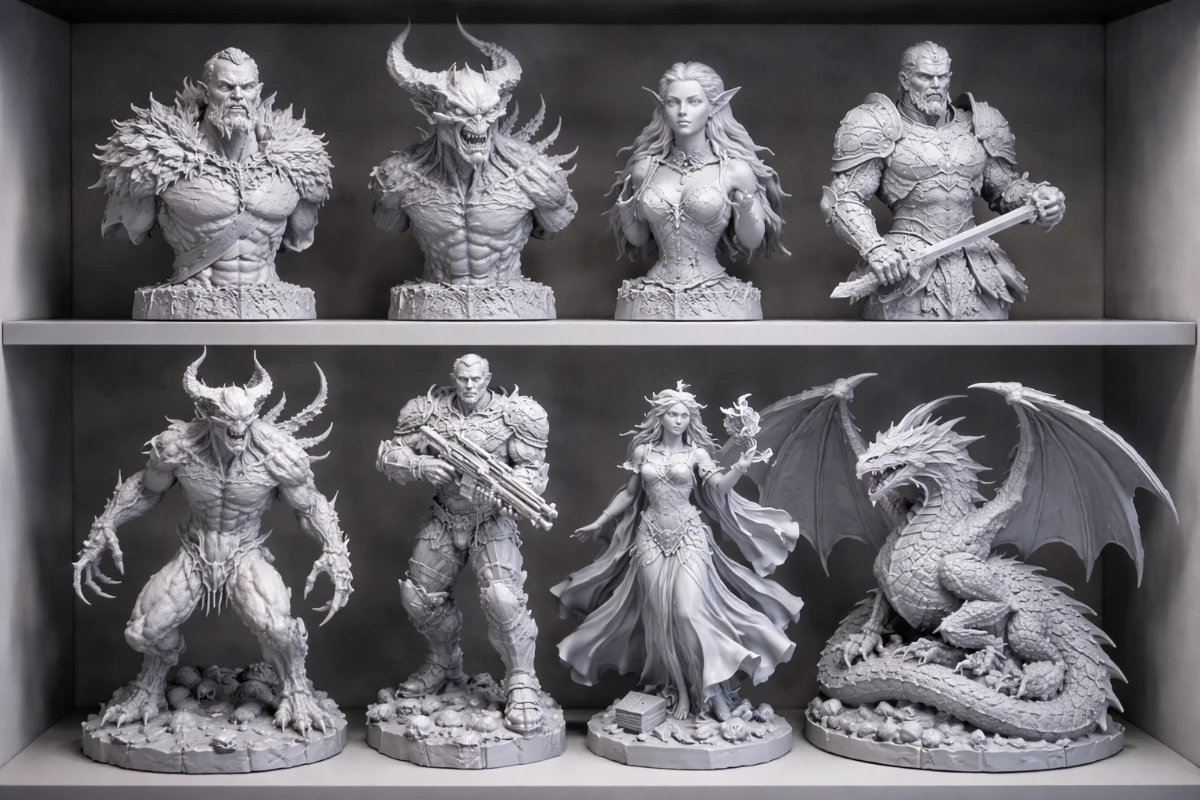
One of the most common questions asked by beginner 3D sculptors is whether to start by sculpting a bust or attempting a full figure. The answer depends on your experience level, goals, and available time — and understanding the differences between the two helps you make the right choice for where you are in your learning journey.
What Makes a Bust Challenging?
A bust — typically the head and upper torso — is deceptively complex. The human face is the part of the body that people recognize most easily and most critically. Our brains are wired to detect even subtle errors in facial proportions. A slightly off nose, asymmetrical eyes, or wrong jaw angle will be noticed immediately by any viewer.
Key Challenges of Sculpting a Bust
- Facial anatomy mastery – The skull shape, brow ridge, orbital depth, cheekbone position, and jaw structure all interact to create a convincing face. Each element must be correct relative to the others.
- Eye sculpting – Eyes are the most expressive and scrutinized facial feature. Getting the eyelid folds, tear duct, and iris depth right requires careful study.
- Hair and skin detail – Hair flow, skin pores, subtle wrinkles, and micro-detail textures are advanced techniques that take time to develop.
- Likeness capture – If sculpting a specific person or character, capturing their distinctive features is extremely challenging.
What Makes a Full Figure More Difficult?
A full figure requires all the skills needed for a bust, plus mastery of the entire human body — proportions, muscle groups, joint anatomy, hands, feet, and how clothing wraps around the form. The complexity increases exponentially.
Additional Challenges of Full Figure Sculpting
- Body proportions – The classical 8-heads-tall proportion system must be internalized, along with realistic variations for different body types and stylized interpretations for characters.
- Hand and foot anatomy – Hands and feet are notoriously difficult. Each hand has 27 bones and complex muscle groups. Professional sculptors dedicate weeks just to studying hands.
- Clothing and fabric folds – Cloth drapes and compresses based on underlying anatomy and gravity. Understanding tension folds, compression folds, and hanging folds is a full study in itself.
- Pose and weight distribution – A convincing pose must reflect realistic weight distribution and body mechanics. Stiff, symmetrical poses look unnatural.
- Scale management – Maintaining correct proportions across the entire figure while working at high detail levels requires frequent zooming out to check the whole.
What Should You Start With?
- Beginner (0–6 months): Start with a bust. Master face anatomy and the core sculpting workflow before adding body complexity. Most beginner courses rightly focus on the head and face.
- Intermediate (6–18 months): Move to full figure once you’re confident with facial anatomy and overall proportions. Focus on anatomy and basic pose before adding clothing and detail.
- Advanced (18+ months): Combine bust-level detail quality with full figure complexity, dynamic poses, clothing, and accessories.
Recommended Learning Resources
The book “Anatomy for Sculptors” by Uldis Zarins is considered the best reference for 3D sculptors. Combined with reference photos and anatomy courses on platforms like CGCircuit or the Gnomon Workshop, you can accelerate your learning significantly.
See our 3D Print Masterpieces for examples of both professional busts and full figures available for printing.